


Gov. Pillen Welcomes Dr. Oz for Update on Successful Implementation of $177 million in RHTP Funding
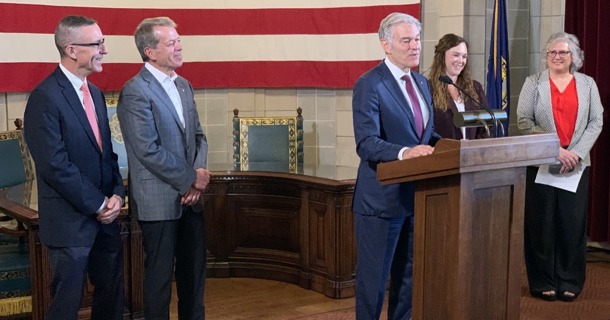
LINCOLN, NE – Today, Governor Jim Pillen welcomed Dr. Mehmet Oz, administrator for the USDHHS Centers for Medicare and Medicaid Services to Nebraska for an update on the successful implementation of the Rural Health Transformation Program (RHTP). Nebraska has awarded more than $177 million, delivering critical investments into local communities that strengthen and modernize rural healthcare while boosting rural economies across the state.
“These investments in rural healthcare are more than dollars. They are delivering real, innovative change that communities are already experiencing firsthand,” said Gov. Pillen. “We are hearing success stories from providers, partners, and residents across Nebraska. RHTP is strengthening care delivery, supporting local economies, and making a meaningful impact in its first year.”
“The Trump Administration’s Rural Health Transformation Program is helping states like Nebraska develop innovative, locally driven solutions to improve rural Americans’ access to high-quality care," said Dr. Oz. "These awards demonstrate how this historic investment is empowering rural communities to strengthen their health systems, put patients first, and bring better care closer to home.”
Nebraska received $218.5 million from the Centers for Medicare and Medicaid Services to support seven initiatives in the first year of a five‑year program. As year one continues, communities are already benefiting from several key initiatives reshaping how rural healthcare is delivered across the lifespan.
Three maternal and family health mobile units are in development to serve the Panhandle Public Health District, Public Health Solutions, and East Central District Health Department regions, helping ensure mothers and families in maternity‑care deserts can access essential services close to home and improve health outcomes in rural communities.
Two hundred and forty provider recruitment and retention awards have been offered, with 172 contracts signed, representing a variety of licensed provider types across 51 counties. Sixty-eight awards are recruiting new providers or expanding new healthcare services in rural areas, directly increasing provider capacity in rural Nebraska. These incentives help rural communities build and sustain a strong healthcare workforce, strengthen local economies, expand access to essential services, and ensure providers can continue to deliver high-quality care where it is needed most.
Forty-five healthcare facilities have gained access to remote monitoring technology, with 68 devices deployed so far, advancing more proactive, coordinated care close to home in rural communities.
Twenty-eight rural pharmacies are receiving support through financial incentives, training, and enhanced ability to support patients with chronic diseases through medication adherence.
One hundred and ninety-eight community health worker and 20 CHW supervisor positions have been created so far, generating local jobs that strengthen rural economies and bolster the rural healthcare system. CHWs coordinate care across rural hospitals and facilities, improve prevention and navigation support, connect residents with regular providers, assist with chronic disease management, and strengthen communication among care teams.
Nebraska is currently collaborating with 26 healthcare facilities, with plans to engage additional partners to strengthen veterans’ access to timely health care at their preferred locations. Additionally, five regional Veteran Benefit Expos will be scheduled for 2027 to expand outreach and connect veterans with essential services across the state.
Rural and frontier schools will soon receive School Kitchen Modernization Grants dedicated to improving school lunch meal quality statewide. These grants strengthen rural communities by supporting scratch cooking, expanding access to healthier, locally sourced foods, and increasing student participation in school meal programs.
Thirty-five farmers, ranchers, and food producers received funding to purchase equipment and supplies to help increase the availability of whole fresh foods in local communities.
Nineteen critical incident stress debriefings were held during the Nebraska 2026 wildfires to provide community mental health support. Rural law enforcement and first responders are being equipped with app-based telehealth pocket co-responders, which give direct access to trained mental health professionals to support individuals experiencing a mental health crisis.
Three community colleges and five community agencies have been awarded funds to become supplemental nutrition assistance program employment and training providers, expanding the program’s reach into previously underserved rural areas and helping more Nebraskans access healthcare career training and move toward self‑sufficiency.
These accomplishments represent just a portion of the progress made so far during the first year of RHTP. Across Nebraska, additional initiatives are actively advancing, and communities continue to benefit from the meaningful work underway to strengthen rural healthcare and local economies.
“In Nebraska, when we see a challenge, we come together to solve it. No single agency can do this work alone. Real progress depends on strong partnerships,” said Ashley Newmyer, Nebraska DHHS director of public health. “We are deeply grateful to our partners across healthcare, education, technology, agriculture, and community organizations whose collaboration is enabling transformational, sustainable change that strengthens rural communities across Nebraska.”
“In our first year, we have seen what rural health transformation looks like in real life. By growing our community health worker team, we are making care work in people’s everyday lives, helping them reach appointments, navigate challenges, and stay connected to the support they need,” said Laura McDougall, director of Four Corners Health Department. “These early wins show how integrated care can make a meaningful difference for the people we serve in Butler, Polk, Seward, and York counties.”
“We are incredibly grateful to RHTP for recognizing the unique needs of rural communities and investing in solutions that will have a lasting impact,” said Diane Brugger, CEO of Antelope Memorial Hospital. “This funding is helping us build a stronger, more connected healthcare system for the future, ensuring that patients can access the tools, knowledge, and support they need to live healthier lives while remaining close to home.”
“By lowering cost barriers and keeping care local, RHTP funding has played an instrumental role in improving medication adherence, managing chronic conditions, and directly driving better overall health outcomes for our patients,” said Dave Randolph, pharmacist and owner of Dave Pharmacies in Alliance and Hemingford, NE. “It has allowed us to meet patient needs and bring a big impact to our small community. In a few short months, we have already added 27 patients to our RHTP, with new patients joining each month. We are excited to see this opportunity progress into year two and cannot wait for the impact to grow.”
To learn more, visit https://dhhs.ne.gov/Pages/Rural-Health-Transformation.aspx.
Trump Administration Announces $160 Million to Recruit Rural Healthcare Workers, Expand Mobile Care, and Modernize Services Across Nebraska
This federal investment will bring new providers to rural communities, deploy remote-monitoring technology at dozens of healthcare facilities, and create hundreds of community health positions across Nebraska
The Trump Administration announced $160 million in Rural Health Transformation Program (RHTP) funding to strengthen rural healthcare delivery across Nebraska. This investment will expand access to care, support healthcare workforce development, modernize rural healthcare technology, and bring services closer to home for rural and frontier communities.
This transformational funding is supporting rural communities across Nebraska. Recruitment and retention awards have already resulted in signed contracts with providers across 55 counties, helping build and sustain a healthcare workforce that serves the needs of rural communities. Forty-five healthcare facilities have gained access to remote-monitoring technology, with 50 devices deployed so far, and more than 200 community health worker and supervisor positions have been created to help residents navigate care, manage chronic disease, and connect with local providers. During Nebraska’s 2026 wildfires, 19 crisis debriefing sessions provided community mental health support, and rural law enforcement and first responders are also being equipped with app-based telehealth tools that provide direct access to trained mental health professionals during a crisis.
The Rural Health Transformation Program is expanding access to quality healthcare, regardless of a patient’s zip code, and equipping first responders with the lifesaving resources they need when every second counts. This funding will make critical investments to strengthen rural healthcare, expand access to lifesaving services, and bring modern technology to communities across Nebraska.
“President Trump understands that every American deserves high-quality healthcare, no matter where they live,” said Health and Human Services Secretary Robert F. Kennedy, Jr. “We are putting resources directly into rural communities to strengthen the health workforce, modernize infrastructure, expand access, and bring care closer to home. We are giving states the flexibility to build solutions around the people they serve, while demanding accountability for results. That is how we strengthen rural health, improve the lives of patients and families, and Make America Healthy Again.”
“President Trump made a historic commitment to rural America, and these investments are turning that commitment into better care for patients in communities across Nebraska,” said Centers for Medicare & Medicaid Services Administrator Dr. Mehmet Oz. “This is what rural health transformation should look like: federal investment that is putting patients first, driving lasting improvements and expanding healthcare for the hardworking Americans who call these communities home.”
Today’s investment was made possible through the Working Families Tax Cuts Act — passed by Republicans in Congress and unanimously opposed by Democrats — delivering a historic $50 billion investment to help states transform the way healthcare is delivered in America.
“Nebraska’s successful first year of the Rural Health Transformation Program reflects the strength of our federal state partnership. This funding is already expanding access to care, addressing critical workforce needs, and supporting prevention focused, technology enabled solutions in our rural communities,” said Gov. Jim Pillen. “It is laying the foundation for a more sustainable health care system. A system that supports healthier families, stronger local economies, and thriving rural communities for generations to come.”
“The Rural Health Transformation Fund was created by Republicans to support rural communities across the country. I was proud to vote to create this program, and I welcome this much-needed funding coming home to Nebraska to expand access to quality health care,” said Sen. Deb Fischer.
“Nebraskans deserve access to quality care regardless of their zip code. Thank you to CMS for this further investment in our state to help strengthen rural healthcare in our communities. I look forward to continuing our work together to deliver on Nebraskans’ priorities and support the Good Life,” said Sen. Pete Ricketts.
“Growing rural Nebraska means protecting quality healthcare close to home. I voted to create the Rural Health Transformation Program to strengthen the hospitals and clinics our small towns depend on. This investment will help Nebraska healthcare facilities grow their workforce, expand mobile and behavioral health services, and keep vital care within reach for rural communities,’ said Rep. Mike Flood.
“I was proud to support the Working Families Tax Cuts, which created the Rural Health Transformation Program, and am pleased to see this vital program continue to invest in rural communities across Nebraska. Moving forward, I will continue to work to ensure that every Nebraskan has access to quality care close to home, regardless of their ZIP code,” said Rep. Adrian Smith.
Today’s announcement is one part of the larger overall funding amount awarded to Nebraska for fiscal year 2026.
Key initiatives the overall RHTP funding will focus on include:
-Building the rural healthcare workforce: Supporting recruitment, training, and retention strategies to strengthen the pipeline of healthcare professionals serving rural communities.
Strengthening rural facilities and access: Supporting partnerships, operational improvements, and care-delivery changes that help rural providers maintain essential services and improve access.
-Advancing innovative care and payment models: Supporting new approaches to delivery and financing designed to improve quality, strengthen primary care, and support sustainable rural healthcare.
-Expanding community-based and preventive care: Investing in school-based care, mobile services, and other community strategies that improve prevention, address chronic disease, and expand access to care.
-Modernizing rural healthcare technology: Expanding remote care and data-driven tools to improve coordination and extend healthcare services to rural communities.
-The Trump Administration is delivering on its commitment to strengthen rural America by investing in solutions that modernize technology to promote health and well-being for rural communities. Led by CMS, the RHTP is moving beyond the failed one-size-fits-all approach and giving rural communities the tools to build stronger, more innovative, and more sustainable health systems that deliver better care and better outcomes for the Americans they serve.
For more information about the RHTP, visit: https://www.medicaid.gov/resources-for-states/rural-health.